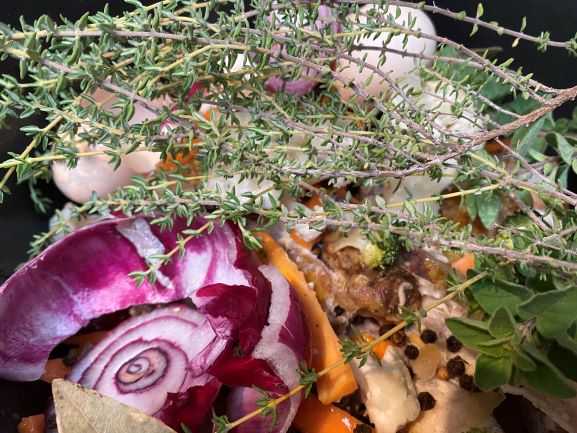
With all the hype at the moment about people stockpiling toilet paper, tissues, paper towel and tinned food in case of a zombie invasion (coronavirus) I thought it timely to blog about a productive way to make the most of everyday food items, not wasting a bit of the food we eat. The added bonus here is that this stock is jam packed full of nutrients.
If we have a roast or cook a whole fish the bones never ever go to waste. They are always turned into a stock that I freeze.
You have probably heard of bone broth. The difference between bone broth and stock is that bone broth is boiled for a long time, while a good stock can be made in about 4 hours. Bone broth and stock can be used interchangeably.
I call mine stock, though it is technically a bone broth, in modern terminology.
I usually boil our stock for a long time to get the most out of the bones and other ingredients. Simmering bones for long periods assists in releasing nutrients such as collagen, gelatin and calcium. These are all great nutrients to support skin, joint and gut health.
Chicken bone broth/stock
- 1-2 chicken carcasses
- 2 onions chopped roughly, including onion skins
- 2 carrots, unpeeled and chopped roughly
- 2 celery stalks, chopped roughly (use the leafy part as well for added flavour)
- 2 table spoons apple cider vinegar
- 1-2 egg shells (increases the calcium level in the final stock)
- 1-2 handfuls of fresh thyme and oregano
- 2 tablespoons salt
- 1 tablespoon peppercorns (not cracked)
- 3 bay leaves
- left over vegetables if you have any (not necessary)
Place all the ingredients in a large stock pot or in a slow cooker and cover with water. Bring to the boil and then simmer.
Simmer for at least 24 hours. I usually leave in the slow cooker for 72 hours, on low and add more water as/if needed.
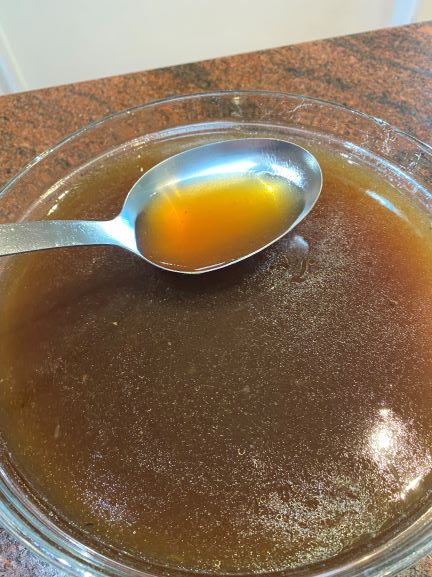
Once you have simmered the bones for the desired time, remove the bones and strain the stock. Allow to cool before decanting and refrigerating or freezing.
A great tip is to freeze the stock in ice cube trays. Once frozen, put them in a ziplock bag in the freezer, ready to use as needed.
Copyright © 2020 Food Family Love. All rights reserved.
 Food Family Love